


Original source
Proceedings of the 2nd General Assembly of the Union of Insurers of the Turkic World in Gaziantep and ASA communique
Visit original source: Report.az / Ассоциация страховщиков Азербайджана (ASA)Türkiye / Gaziantep · Central Asia
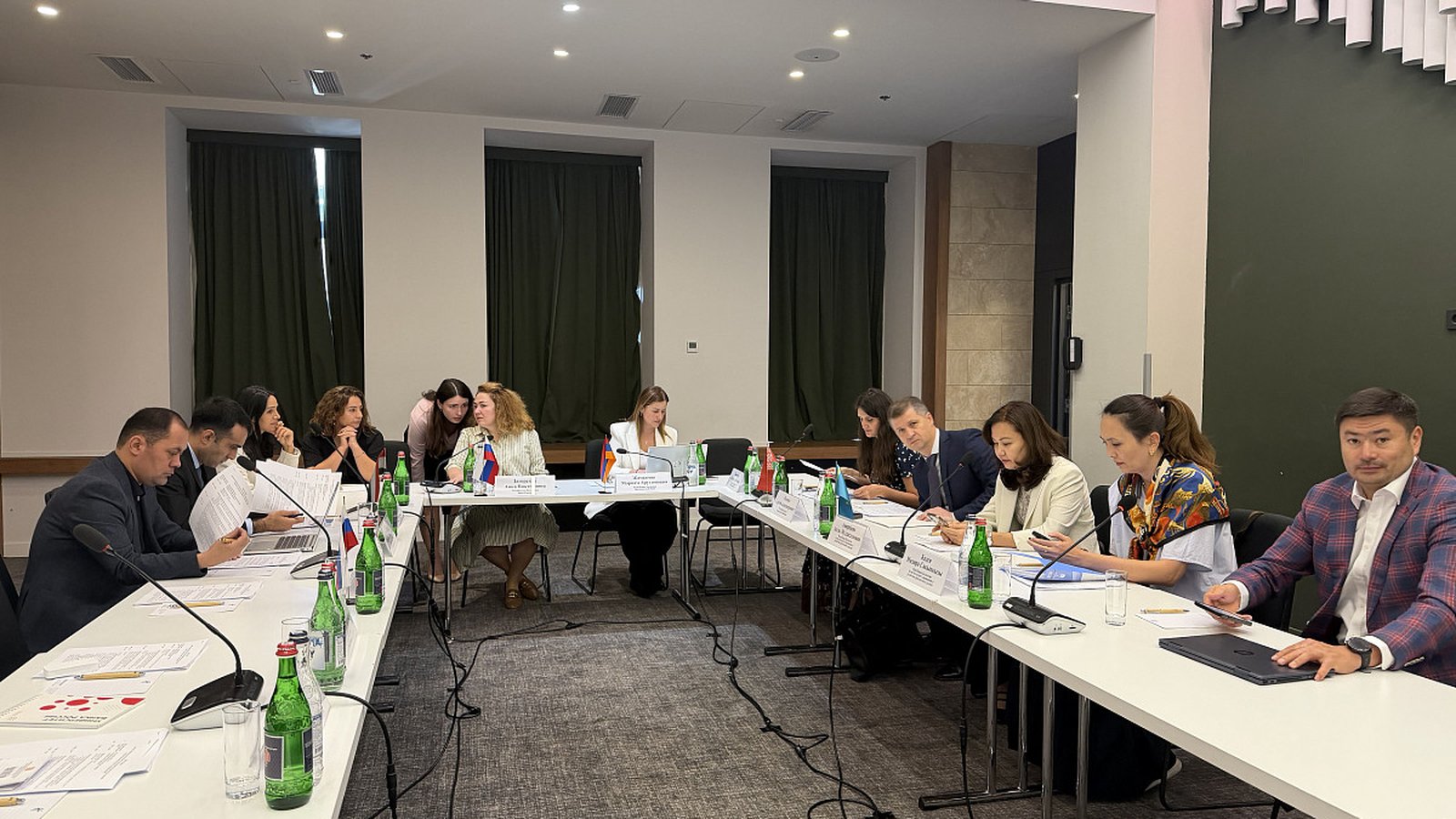
The 2nd General Assembly of the Union of Insurers of the Turkic World (Türk Dünyası Sigorta Birliği) convened in Gaziantep, Türkiye, bringing together insurance regulatory leaders, industry associations, and premier reinsurance executives from Azerbaijan, Türkiye, Uzbekistan, Kyrgyzstan, and Northern Cyprus. The summit's defining breakthrough was the consensus on a concrete implementation roadmap to establish the Unified Reinsurance Pool of the Turkic World. Convening in Gaziantep carried profound operational relevance, recalling the lessons of the catastrophic 2023 earthquakes and highlighting the imperative for collaborative natural catastrophe risk pooling. This publication is presented for informational purposes, analyzing the nascent pool through the prism of actuarial risk accumulation theory, solvency capital margins, and cross-border loss absorption.
Institutional Governance and Leadership Mandates
During the assembly, delegates endorsed governance charters and mapped out the subsequent integration milestones:
- Union Leadership: The assembly unanimously elected Atilla Benli, former President of the Insurance Association of Türkiye (TSB), as President of the Union of Insurers of the Turkic World. Mammad Agayev, Advisor to the Executive Director of the Azerbaijan Insurers Association (ASA), was appointed Secretary General;
- Central Asia & Caucasus Market Integration: Delegations from Uzbekistan and Kyrgyzstan submitted domestic commercial, industrial, and infrastructure portfolios for preliminary integration into the regional capacity facility;
- Next Assembly: The 3rd General Assembly of the Union is scheduled for 2027 in Uzbekistan, where the pilot distribution of participant capacity shares and retrocession retention limits will be unveiled.
Strategic Objectives: Foreign Exchange Retention and NatCat Capacity
The multilateral reinsurance facility tackles key macroeconomic and structural sector vulnerabilities:
- Foreign Exchange Capital Retention: Historically, 70% to 85% of reinsurance premiums generated across major property, energy, and catastrophe lines in Central Asia and the Caucasus flowed outward to global reinsurers in London, Zurich, and Munich. Forming a unified regional pool retains substantial underwriting margins within the macro-region;
- Absorption of Natural Catastrophe (NatCat) Tails: Earthquake response in Türkiye and seasonal flash floods across Central Asia exposed the fiscal limitations of isolated domestic balance sheets. A shared pool smooths capital drawdown during extreme fat-tailed events;
- Harmonization of Prudential Standards: Participating jurisdictions committed to establishing unified solvency assessment metrics aligned with Solvency II and statutory IFRS 17 standards, alongside mutual recognition of regional security ratings without discriminatory collateral burdens.
Actuarial Perspective: Seismic Fault De-correlation and Capital Efficiency
Under mathematical probability and extreme value theory, a cross-border regional pool unlocks tangible capital optimization benefits:
- Spatial De-correlation: Geographic distribution of insured assets spanning from the Aegean coast across the Caspian to the Fergana Valley and Tien Shan suppresses statistical correlation between localized seismic and meteorological events. East Anatolian fault systems and Central Asian tectonic belts exhibit no direct physical fault-linkage, corroborating the actuarial premise of regional diversification;
- Probable Maximum Loss (PML) Aggregation: For actuaries, the primary objective entails calibrating joint Aggregate Exceedance Probability (AEP) curves and computing statutory Solvency Capital Requirement (SCR) margins for each domestic risk carrier;
- Enhanced Retrocession Leverage: The pool does not sever international ties but acts as a consolidated institutional cedent with expanded bargaining leverage, securing softened retrocession terms amidst a hardened global market.
Actuarial conclusion: The establishment of the Turkic World Reinsurance Pool is mathematically validated by the spatial de-correlation of seismic and hydrological hazards across Anatolia and Central Asia. Actuaries across participating jurisdictions must construct joint Probable Maximum Loss (PML) catastrophe models and standardize IFRS 17 Risk Adjustment methodologies to ensure equitable capital attribution across the multilateral syndicate.
Source: Report.az, Media.az, Azerbaijan Insurers Association (ASA). Also reported by: Insur-info.ru, Anadolu Agency.
VIP Quotes & Public Reactions
Public statements by leaders, regulators, scientists and industry figures — on social networks, at conferences and in official releases
Establishing the Unified Reinsurance Pool of Turkic States is a historic milestone toward the financial sovereignty and resilience of our insurance markets. By pooling reinsurance capacity across Türkiye, Azerbaijan, Uzbekistan, and Kyrgyzstan, we buffer our economies against catastrophic shocks and retain underwriting capital within our macro-region.
Story History & Timeline
Key milestones, background of the dispute, and previous developments

Related articles
Back to all news →
SCOR Study: European Corporate Captive Insurers Maintain 221% Median Solvency Ratio Under Solvency II Framework
