
КПА

News

Developments, analysis and initiatives in the actuarial profession and insurance markets in Kazakhstan and worldwide.

TopicsAll Categories
IN FOCUS
Articles: 85
AI Visualization
Global reinsurer SCOR published its annual quantitative benchmark 'European Captives: Analytical review of Solvency II reports'. Analyzing 223 published SFCR disclosures across licensed European corporate captives, the study revealed a median Solvency Capital Requirement (SCR) coverage ratio of 221%, more than double the statutory threshold. Across the sample, aggregate balance sheet assets reached €37.3 billion with €23.1 billion in available own funds. Non-life underwriting risk accounts for 69% of baseline capital charges. The findings provide critical actuarial reference points for Kazakhstan and Central Asia as regional regulators prepare Solvency II codification and industrial groups evaluate captive self-insurance architectures.

AI Visualization
Under Order No. 133 dated October 6, 2026, Kazakhstan's Ministry of Healthcare formally expanded mandatory medical malpractice co-insurance to clinical interns and resident physicians. Trainees practicing under licensed physician supervisors are insured within existing hospital policy limits without incremental premium charges. Compensable claims require verified evidence of patient harm established exclusively by an Independent Expert Commission or a binding judicial decree.
AI Visualization
Insurance Services Office (ISO/Verisk) has enacted standardized commercial endorsements CG 40 47 and CG 40 48, stripping generative artificial intelligence liabilities from baseline Commercial General Liability (CGL) policies. Leading global carriers are eliminating unpriced 'Silent AI' exposures, excluding damages arising from model hallucinations, algorithmic failures, and automated intellectual property infringements absent affirmative standalone underwriting.
AI Visualization
The Central Bank of Azerbaijan (CBAR) has finalized regulatory amendments obligating commercial lenders to offer voluntary unemployment insurance to consumer credit applicants. Engineered to dampen Non-Performing Loan (NPL) volatility and preserve banking regulatory capital, the framework assigns pricing directly to private insurers using actuarial risk differentiation across economic employment sectors.
AI Visualization
Effective October 21, 2026, amendments to Article 25 of Kazakhstan's Mandatory Motor TPL Law eliminate cash claim payouts through insurer branches. All crash indemnities must be remitted strictly to bank accounts, with any bank transfer and disbursement charges absorbed entirely by insurers. The reform cements digital auditability across the ESBD database and displaces informal claims brokers.
AI Visualization
Kazakhstan's financial regulator has finalized the 2030 Insurance Market Development Roadmap and the draft Law On the Insurance Market. Core initiatives include establishing an independent Central Actuary to unify statutory reserving and pricing models, introducing mandatory catastrophe insurance for residential property, and transitioning to Solvency II standards.
AI Visualization
The Geneva Association, in collaboration with OGCI and CEM CCUS, has published a comprehensive framework addressing the insurability of Carbon Capture, Utilization, and Storage (CCUS). The paper focuses on cross-value-chain liability allocation, long-term geological stewardship, and actuarial models for subsurface containment risks.
AI Visualization
Kazakhstan's Ministry of Labor and Social Protection, in partnership with State Annuity Company (GAK), launched a fully digital portal at online.gak.kz for mandatory workplace accident insurance (WCA / OSNS). Key employer and employee records auto-populate from the Unified Insurance Database (ESBD) and state registers, enabling paperless signing via corporate digital signature (EDS). As of October 2026, statutory coverage expanded to 3.5 million workers (+1.13 million year-over-year), targeting 130,000 participating employers by year-end.
AI Visualization
Ahead of the Baden-Baden 2026 reinsurance symposium, Swiss Re's Head of P&C Reinsurance for Northern, Central & Eastern Europe Leopoldo Camara highlighted that surging dedicated reinsurance capital supply is essential to counter intensifying systemic risks. Modern risk aggregation is driven by four structural forces: multi-billion-dollar asset concentrations in AI data center campuses, geographic clustering of severe convective storms, supply-chain amplification in motor claims, and rapid digital contagion of civil commotion via social networks.
AI Visualization
Kazakhstan's Minister of Finance Madi Takiyev presented a stewardship review of the Social Health Insurance Fund (FSMS) at a government meeting: 1.93 trillion tenge was disbursed to healthcare providers over 9M 2026, while the Qalqan digital monitoring platform prevented 23.4 billion tenge in fraudulent billing and claims leakage. Statutory contribution rates will not increase as actuaries model fund solvency through 2040.
AI Visualization
European supervisory authority EIOPA issued a formal Supervisory Statement guiding national competent authorities on the supervision of insurance and reinsurance undertakings associated with private equity firms. The supervisor mandates heightened scrutiny over offshore funded reinsurance conduits, asset-stripping vulnerabilities, complex financial leverage, and illiquid private credit allocations under Solvency II.
AI Visualization
Order No. 133 of the Ministry of Healthcare dated October 6, 2026 amends medical malpractice insurance rules effective October 23. Medical interns and residents are formally included in co-insurance coverage without additional premium, mandatory digital pool execution via electronic signature is established, and a 10-day compensation payment window is mandated.
AI Visualization
At the 2nd Assembly of the Union of Insurers of the Turkic World in Gaziantep, delegates from Azerbaijan, Türkiye, Uzbekistan, Kyrgyzstan, and Northern Cyprus endorsed a roadmap for a cross-border reinsurance pool designed to retain catastrophic and large industrial risks within the region and optimize underwriting capacity.
AI Visualization
The Cabinet of Ministers of the Kyrgyz Republic adopted Decree No. 593 establishing compulsory tour operator liability insurance. Minimum coverage thresholds are set at 3 million soms for standard routes and 5 million soms for extreme mountaineering, mandating coverage of state emergency service (MES) search-and-rescue operations lasting at least 72 hours.
AI Visualization
Overnight on October 12, threat actors compromised internet-facing Danfoss commercial refrigeration controllers across hundreds of French supermarkets (Intermarché, Coopérative U, Netto, E.Leclerc), forcing continuous defrost cycles up to 50°C. The assault triggered widespread inventory destruction and localized fires, exposing a severe protection gap at the intersection of Property and Cyber covers.
AI Visualization
The State Social Insurance Fund (SSF) clarified that new needs-based eligibility criteria taking effect January 1, 2027, will apply solely to budget-funded state allowances. Insurance benefit payouts for disability, loss of breadwinner, and job loss will remain anchored in mandatory employer contributions, fully independent of household means testing.
AI Visualization
Rapid enterprise adoption of generative and autonomous AI has triggered the 'Silent AI' underwriting exposure. Companies are quietly swapping human quality control and advisory processes with algorithms without disclosing these operational shifts in insurance proposals, leaving carriers pricing portfolios against obsolete risk baselines.
AI Visualization
The FBI has arrested Edward Dubrovsky, co-founder of prominent incident response and ransomware negotiation firm CYPFER, on charges of extortion and conspiracy with the ShinyHunters cybercrime syndicate. The case throws cyber insurance approved vendor panels into turmoil, revealing structural deficiencies in consultant licensing and third-party oversight.
AI Visualization
On the Toshkent Republican Stock Exchange, shares of JSC Kafolat Insurance Company rallied 98.05% across a single trading week. The speculative surge reflects heightened institutional investor positioning ahead of state equity privatizations and Uzbekistan's nationwide transition to risk-based solvency capital standards.
AI Visualization
Kazakhstan has finalized its seasonal parametric soil drought insurance cycle: against 3.4 billion tenge in underwritten premiums (80% state-subsidized), insurers disbursed 5.1 billion tenge in indemnities to farmers. Satellite remote sensing confirmed drought damage across 385.4 thousand hectares in 10 regions.
AI Visualization
ARDFM and the National Bank of Kazakhstan have formulated statutory legislation mandating residential property catastrophe insurance covering earthquakes, floods, and wildfires. Annual premiums are calibrated from 0.5 to 5 MCI depending on regional hazard zones, with total loss indemnity capped at 500 times the annual premium (up to 10–11M tenge).

AI Visualization
Effective October 21, 2026, statutory amendments enter into force in Kazakhstan prohibiting cash payouts for mandatory motor third-party liability (MTPL) claims. All settlements must be executed via direct bank wire transfers to beneficiaries' accounts, with processing fees fully absorbed by insurers.
AI Visualization
Fitch Ratings and Moody's RMS released catastrophic insured loss estimates for Hurricane Milton in Florida, projecting private insured losses of $30–50B. Combined with Hurricane Helene, cumulative losses will exceed $50B, transferring major financial claims onto global reinsurers.
AI Visualization
Public discussions for Kazakhstan's comprehensive draft Law 'On the Insurance Market' concluded on the Open Legal Acts portal, consolidating 11 statutes into a unified code of 255 articles. The landmark reform supersedes the 2000 law, embeds Solvency II risk-based supervision, establishes a unified mandatory insurance architecture, and institutes compulsory disaster insurance for residential property.

AI Visualization
Effective October 16, 2026, new regulatory rules governing pension annuity contracts enacted via ARDFM Board Resolutions No. 130 and No. 131 enter into force in Kazakhstan. The overhaul eliminates paper filings and mandatory physical visits to the UAPF by transitioning administrative workflows into the Unified Insurance Database (ESBD), slashes the asset transfer timeline from 10 to 7 business days, authorizes one-off personal cash top-ups to meet minimum annuity thresholds, strengthens beneficiary rights, and institutes a 1.5% daily delay penalty on non-compliant life insurers.

AI Visualization
Kazakhstan has concluded the primary operations for its voluntary index-based crop insurance season covering soil moisture deficits (drought). According to state program operator Agrarian Credit Corporation JSC, total indemnities disbursed to agricultural producers surpassed 5 billion tenge. The state subsidy covering 80% of insurance premiums, combined with automated satellite soil moisture monitoring via Kezekte.kz and the Qalqan telemetry engine, ensured rapid loss compensation across affected grain-producing oblasts.

AI Visualization
In an Almaty courtroom, judicial inquiry concluded and closing arguments commenced in the high-profile criminal case alleging over 2 billion tenge in state losses from commercial agreements between the Centre for Workforce Development (CRTR) and the First Credit Bureau (PKB). Prosecutors requested prison sentences ranging from 4 years 8 months to 15 years for five defendants. Defense counsel for former PKB CEO Ruslan Omarov contested all charges, challenged the prosecution's loss calculation as flawed lost-profit speculation, and proved the absence of server logs confirming malicious throttling code.
AI Visualization
Germany's financial supervisor BaFin alongside the GDV approved the three-tiered Elementar Re nat-cat framework: €4B primary retention, international reinsurance layer, and sovereign backstop above €10B, backed by Munich Re's 300% Solvency II ratio.
AI Visualization
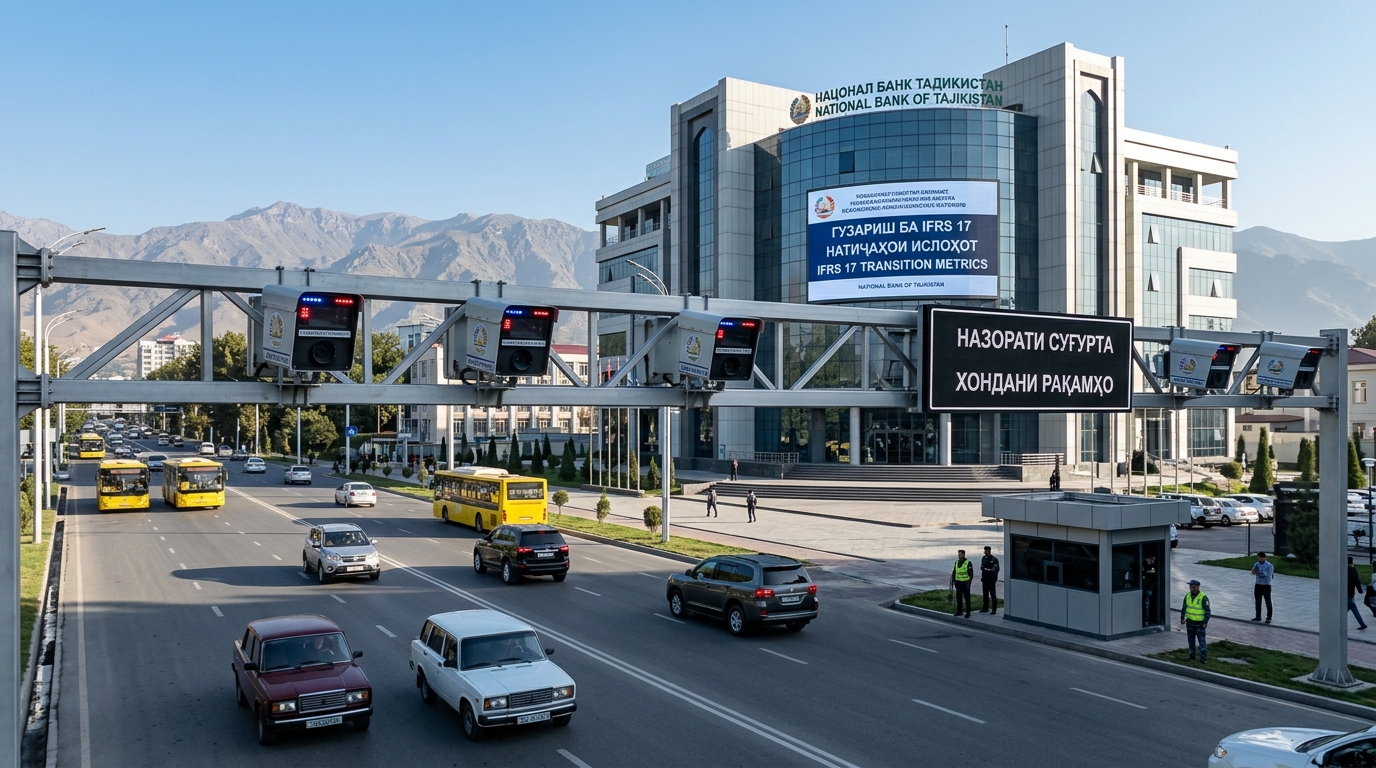
The National Bank of Tajikistan adopted the 2026–2030 Insurance Development Strategy, linking Dushanbe traffic surveillance directly to the national MTPL database while mandating IFRS 17 actuarial reserving.
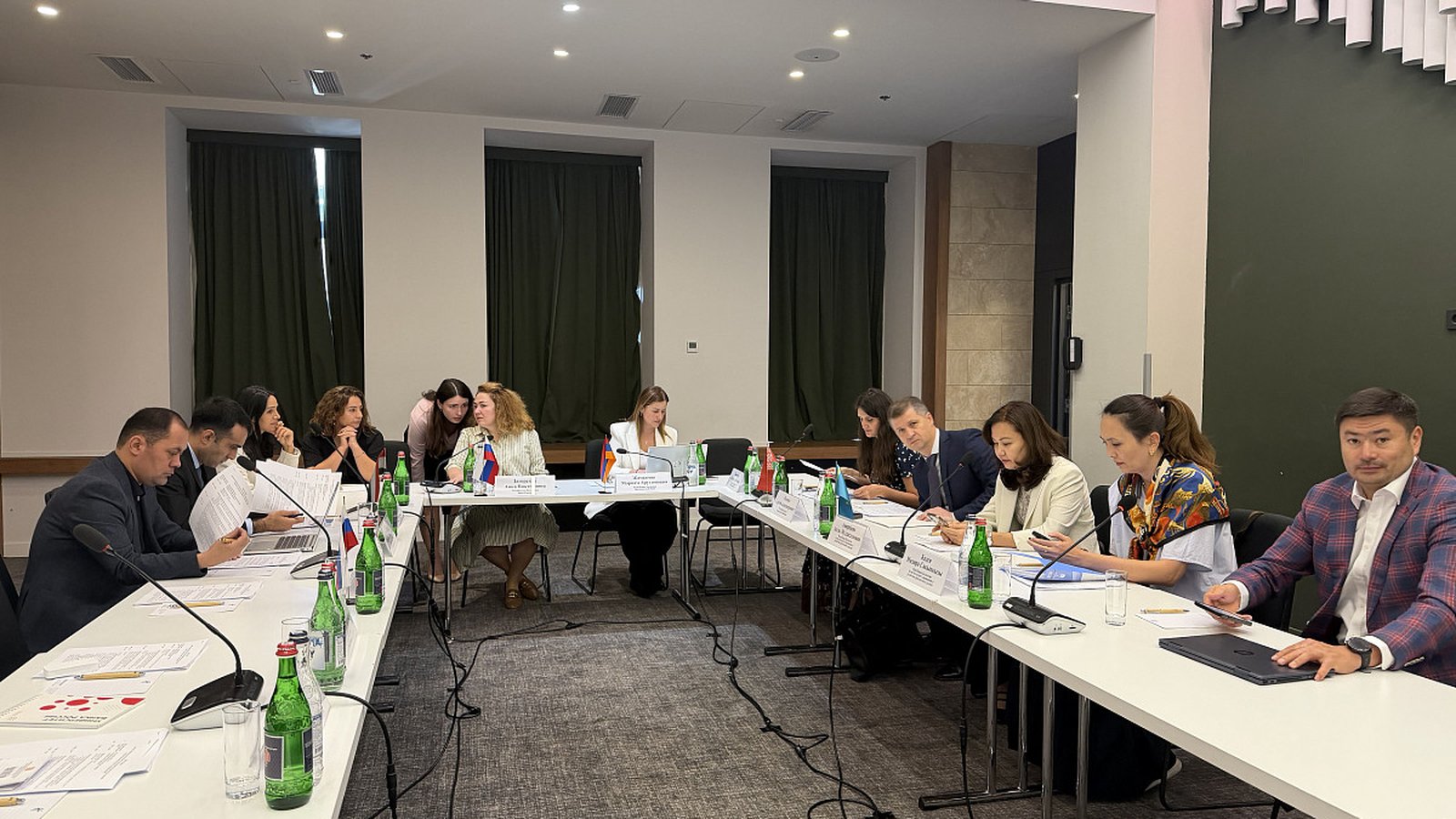
Insurance supervisory chiefs across the CIS convened in Yerevan for their 22nd session, ratifying secure data exchange standards for cross-border motor lines and reciprocal reinsurance credit rules.